
Remember the last time you manually sorted through hundreds of emails, compiled a report from scratch, or spent hours scheduling a meeting across three time zones? For many of us, these tasks are fading from our weekly grind. The reason isn’t a new policy or a sudden surge of productivity. It’s a quiet, pervasive shift driven by Artificial Intelligence.
AI in the workplace isn’t about humanoid robots sitting at desks. It’s about intelligent software woven into the tools we already use, transforming not what we do, but how we do it. It’s freeing us from the repetitive and empowering us to focus on the human-centric parts of our jobs: strategy, creativity, and connection.
From Assistant to Co-Pilot: AI’s New Role
The biggest change is the evolution of AI from a passive tool to an active partner. It’s moving beyond simple automation (“do this task”) to augmentation (“help me think, create, and decide”).
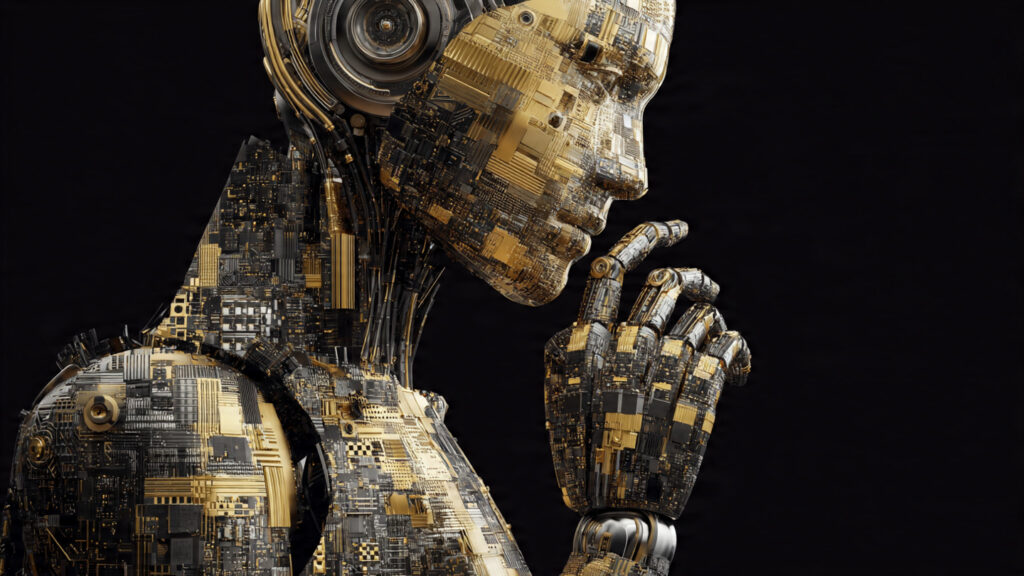
The Old Way: Software waited for your command. You had to know exactly what to ask and how to ask it.
The AI Way: Software anticipates, suggests, and collaborates. It’s less like a hammer and more like an experienced coworker looking over your shoulder with relevant ideas.
Let’s look at where this is happening every day.
The Practical Shift: Four Areas AI is Transforming Right Now
1. Communication & Creativity: Your AI Thought Partner
This is the most visible shift for office workers and creatives.
- Writing & Content Creation: Tools like Grammarly or embedded AI in Word and Google Docs go far beyond spell check. They suggest clearer phrasing, adjust tone for your audience, and help overcome writer’s block by generating first drafts of emails, proposals, or social posts. In my own work, I use it to quickly outline ideas or rephrase a clunky paragraph—it’s like having an instant editor.
- Meeting & Administrative Overhead: AI meeting assistants (like Otter.ai or Zoom’s built-in features) transcribe conversations in real-time, highlight action items, and summarize key decisions. Scheduling tools (like Clockwise or x.ai) now negotiate meeting times across calendars autonomously, eliminating the back-and-forth emails. This alone can reclaim hours in a week.
- Design & Media: Platforms like Canva or Adobe’s Firefly allow marketers and small business owners to generate professional-looking graphics, edit photos by removing objects with a brushstroke, or create unique visual assets from a text prompt. It democratizes design skills.
2. Data & Decision-Making: From Gut Feel to Guided Insight
This is where AI’s pattern-recognition power shines brightest.

- Analyzing Mountains of Data: Sales teams use AI (in platforms like Salesforce Einstein) to analyze customer interaction data and predict which leads are most likely to convert, prioritizing human effort. HR departments use it to sift through applications, not to make hires, but to surface candidates that best match a role’s requirements, reducing unconscious bias in the initial screening.
- Personalized Customer Service: Chatbots have evolved. The early ones were frustrating, rule-based menus. Modern AI-driven chatbots can understand natural language, access knowledge bases, and resolve common customer issues 24/7. For complex problems, they summarize the customer’s history for the human agent who steps in, creating a seamless handoff.
- Risk & Operations: In fields like finance and logistics, AI monitors transactions for fraud patterns in milliseconds and optimizes delivery routes in real-time based on traffic, weather, and demand. It’s a supercharged analyst working at inhuman speed.
3. Specialized Skills & Expertise: AI as a Force Multiplier
AI is creating expert-level capabilities for non-experts.
- In Coding: GitHub Copilot suggests lines and blocks of code as developers type, like an autocomplete for programming. It doesn’t replace the developer’s architectural thinking but dramatically speeds up the tedious parts and helps prevent minor errors.
- In Healthcare: Radiologists use AI imaging tools that highlight potential areas of concern on an X-ray or MRI scan, acting as a second pair of eyes to improve diagnostic accuracy and speed.
- In Law & Compliance: AI software can review thousands of legal documents for relevant clauses during discovery or scan new regulations to flag potential impacts on a company’s operations. This lets professionals focus on strategy and argument.
4. The Remote & Hybrid Work Glue
AI is solving some of the biggest friction points of distributed teams.
- Real-Time Translation: Meetings with global teams can use AI-powered live translation captions, breaking down language barriers without the lag of a human translator.
- Project Management Intelligence: Tools like Asana or Trello use AI to predict project timelines, warn of potential bottlenecks before they cause delays, and automatically assign tasks based on team members’ workloads and skills.
- Culture & Connection: Some platforms analyze communication patterns (with privacy safeguards) to alert managers if a remote team member is becoming isolated or if a team’s morale might be dipping, enabling proactive support.
People Also Ask: Navigating the AI Work Transition
Q: Will AI take my job?
A: It’s more accurate to say AI will change most jobs. The historical pattern with technology is that it automates tasks, not entire occupations. Bank tellers weren’t eliminated by ATMs; their role shifted to customer relationship management. Focus will move from performing every repetitive task to managing, interpreting, and applying AI’s output. Jobs heavy on routine information processing are being reshaped, while roles requiring emotional intelligence, complex problem-solving, and creativity are becoming more valuable.
Q: What skills will be most important in an AI workplace?
A: The “uniquely human” skills are your career armor:
- Critical Thinking & Judgment: The ability to question AI’s suggestions, spot bias in its data, and make the final ethical call.
- Creativity & Innovation: AI excels at optimizing within known patterns. Humans excel at imagining wholly new patterns, products, and strategies.
- Emotional Intelligence (EQ): Leadership, mentorship, negotiation, empathy, and building trust cannot be coded.
- AI Literacy: Not needing to code AI, but understanding what it can and cannot do, how to phrase effective prompts (“prompt engineering”), and how to interpret its results.
Q: Is it ethical for companies to use AI in hiring or monitoring?
A: It’s a major concern requiring vigilance. AI can reduce bias if trained on diverse, fair data. But if it learns from historical hiring data that is itself biased, it can perpetuate discrimination at scale. The key is human oversight and transparency. Companies must audit their AI tools, ensure humans make final decisions, and be clear with employees about how any monitoring AI is used. It’s a tool for empowerment, not surveillance.
Q: How do I start using AI in my job without being replaced by it?
A: Become an early adopter and experimenter.
- Start Small: Use the AI already in your software (Microsoft 365 Copilot, Google Workspace Duet, etc.). Try generating a meeting agenda or cleaning up a dataset.
- Focus on Tedium: Identify one repetitive, time-consuming task in your week. Is there an AI tool that could handle 80% of it?
- Adopt a Co-Pilot Mindset: Don’t ask, “Will this replace me?” Ask, “How can this free up my time for more valuable work?”
The Human Imperative: Leadership, Ethics, and Adaptation
The ultimate impact of AI on work depends less on the technology itself and more on human choices.
- Leaders must guide this transition ethically, investing in employee reskilling and focusing AI on augmenting human potential rather than simply cutting headcount for short-term profit.
- Employees must adopt a mindset of lifelong learning, staying curious about new tools and doubling down on the irreplaceable human skills they bring.
- The Nature of Work will increasingly be a collaboration. The most successful professionals will be those who can effectively partner with AI, directing its capabilities toward meaningful goals.
The Bottom Line: Elevation, Not Replacement
The narrative of robots taking all jobs is a distraction. The real story is one of professional elevation.
AI is taking the robot out of the human—handling the dull, data-heavy, repetitive tasks that drain our energy. This is creating space for us to put more humanity into our work: to think more strategically, create more bravely, connect more empathetically, and solve problems we never had the bandwidth to tackle before.
The change isn’t coming from a future; it’s unfolding in your inbox, your design software, and your project dashboard right now. The question isn’t whether AI will change how you work. It already is. The question is: How will you adapt to harness it, and what more human work will you do with the time and insight it gives you? The future of work belongs to those who can answer that.