
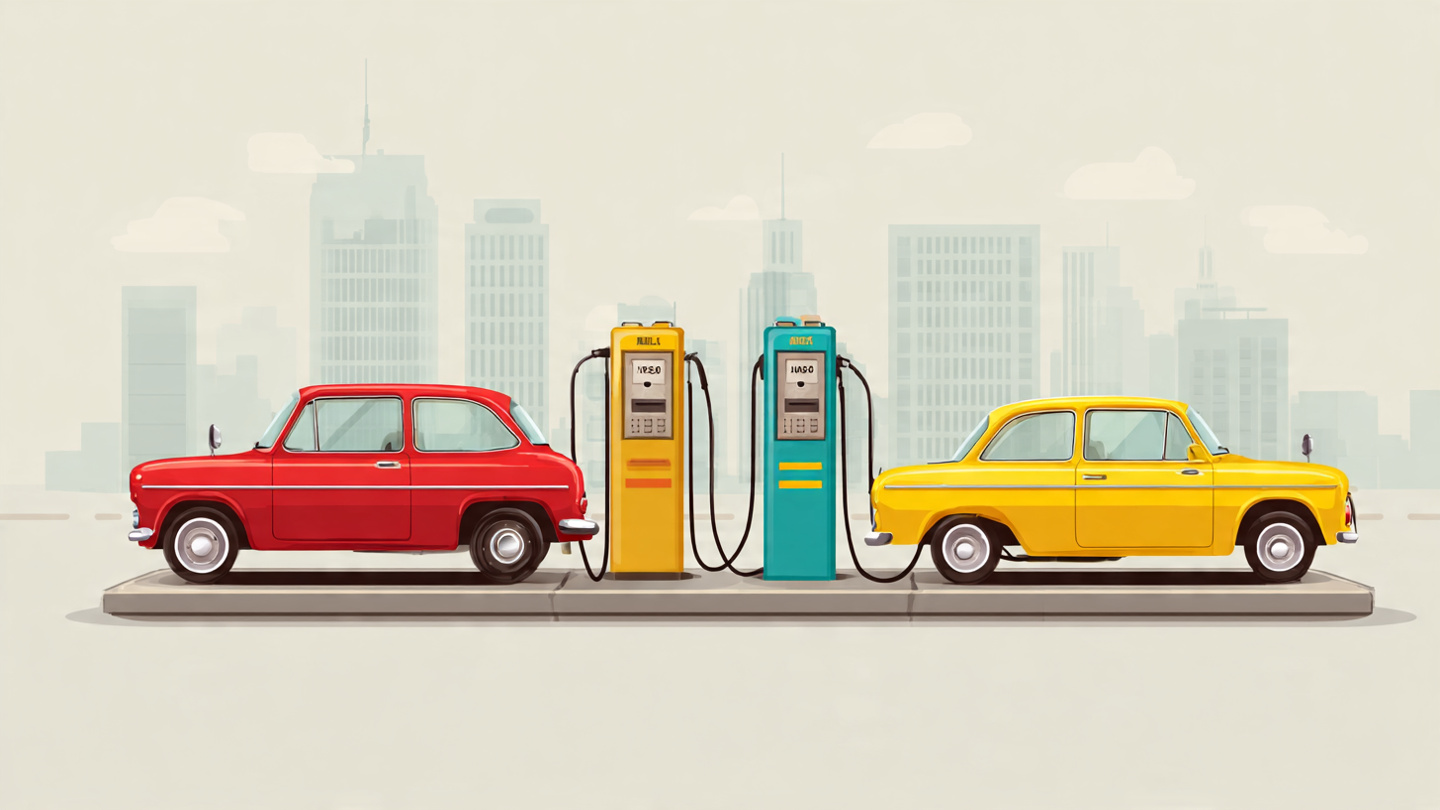
I filled petrol yesterday. The attendant said “₹9,850 please.” For one tank. One single tank of fuel.
Ten years ago, this would have seemed impossible. Today, it’s reality. And it’s exactly why my neighbor Rajesh switched to an electric car last month. His monthly fuel bill went from ₹12,000 to ₹2,400.
The shift to electric vehicles isn’t coming someday. It’s happening right now. And those who understand why this transition is inevitable will make smarter decisions about their next car purchase.
Let me show you why electric cars aren’t just an alternative—they’re the obvious next step in how humans move from place to place.
The Economics Make Too Much Sense to Ignore
Money talks. And right now, it’s screaming “go electric.”
My friend Priya runs a small delivery business in Pune. She replaced two petrol scooters with electric ones. Her first-year savings? ₹1,85,000. That’s not a typo. Nearly two lakhs saved just on fuel and maintenance.
The Real Cost Comparison
Let’s break down what it actually costs to run a vehicle over five years.
Petrol Car (Mid-size sedan, 15,000 km/year):
- Fuel cost: ₹6,00,000 (at current ₹100/liter, 15 km/l)
- Maintenance: ₹1,20,000 (oil changes, filters, spark plugs, etc.)
- Total: ₹7,20,000
Electric Car (Similar size, 15,000 km/year):
- Electricity cost: ₹1,05,000 (at ₹7/unit, 6 km/unit)
- Maintenance: ₹25,000 (brakes, tires, minimal servicing)
- Total: ₹1,30,000
Five-year savings: ₹5,90,000
That’s enough money to buy another small car.
But here’s what really matters: this gap is widening. Petrol prices keep climbing. Electricity rates remain relatively stable. Every year you drive electric, the savings compound.
Suresh in Bangalore did the math before buying his Tata Nexon EV. His daily commute is 45 km. His old diesel car cost him ₹350 daily in fuel. The EV? About ₹65 in electricity. That’s ₹8,550 saved every month.
Governments Are Forcing the Change
Individual choice matters, but government policy shapes entire industries.
Every major country has announced dates to ban new petrol and diesel car sales. This isn’t a maybe. It’s official policy.
Global phase-out timeline:
- Norway: 2025 (already almost there)
- United Kingdom: 2030
- European Union: 2035
- China: 2035
- India: Strong push for 30% EV sales by 2030
India is offering massive incentives under the FAME II scheme. Tax benefits, subsidies, lower GST rates—all pushing people toward electric vehicles.
Automakers see the writing on the wall. Tata Motors has committed to going all-electric by 2030. Maruti Suzuki is investing ₹45,000 crores in EV development. Mahindra has five new electric SUVs launching by 2026.
When governments and manufacturers align on one direction, that direction becomes inevitable.
Arvind works at a Hyundai dealership in Delhi. He tells me customer inquiries about electric models have tripled in the past year. The questions aren’t “Should I go electric?” anymore. They’re “Which electric car should I buy?”
That’s a fundamental shift in thinking.
Technology Is Improving at Breakneck Speed
The electric car you can buy today is vastly superior to what was available just three years ago.
Battery improvements:
- 2020: Average range 200-250 km
- 2025: Average range 350-450 km
- 2027 (projected): Average range 500-600+ km
Charging times are plummeting too. Fast chargers now give 80% charge in 30-40 minutes. New solid-state batteries (coming by 2027-2028) promise 80% charge in under 15 minutes.
Rekha was skeptical about range until she test-drove the new MG ZS EV. Real-world range of 380 km. She drives about 60 km daily. That means charging once every six days. Far less hassle than weekly petrol station visits.
Battery Costs Are Dropping Dramatically
Here’s the thing nobody talks about: batteries are becoming cheaper every year.
In 2010, battery packs cost around $1,100 per kWh. In 2024, that’s down to approximately $130 per kWh. By 2028, experts predict it’ll hit $80 per kWh.
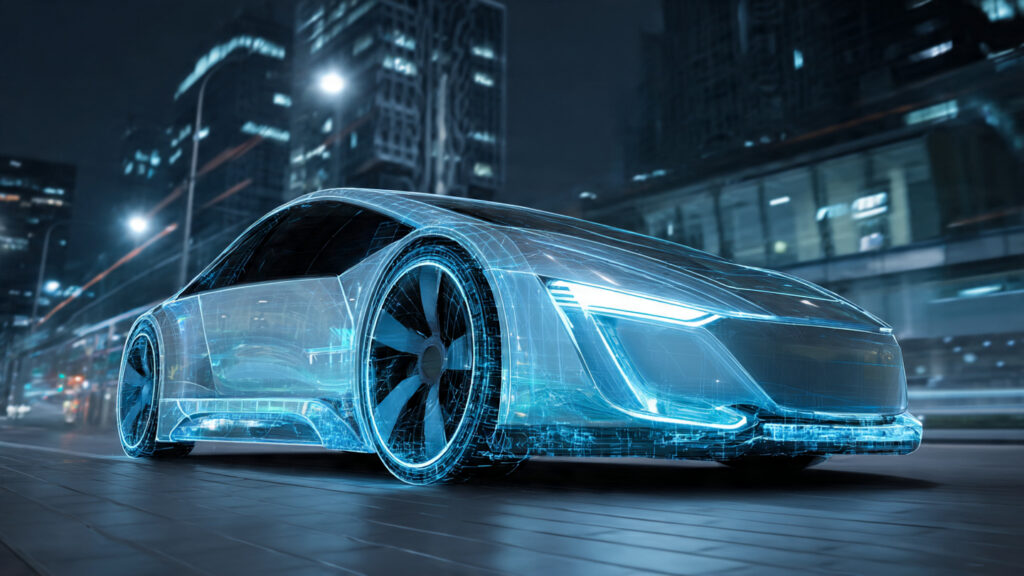
Why does this matter? Because batteries are the most expensive component of an electric car. As battery prices fall, EV prices fall. Soon, electric cars will cost the same as petrol cars to manufacture. Then they’ll cost less.
At that point, buying a petrol car becomes financially irrational.
The Environmental Reality We Can’t Escape
Let’s be honest about climate change. It’s real. It’s happening. Transportation is a massive contributor.
Personal vehicles produce about 15% of India’s carbon emissions. Switch those to electric, run on renewable energy, and that percentage drops dramatically.
“But electricity in India comes from coal,” skeptics argue.
True. But even when charged with coal-generated electricity, EVs produce fewer emissions than petrol cars over their lifetime. As India’s renewable energy capacity grows (solar is expanding rapidly), that advantage increases.
Current scenario:
- Petrol car: 120-150g CO2 per km
- EV (coal-based electricity): 80-100g CO2 per km
- EV (renewable electricity): 0-20g CO2 per km
Plus, pollution concentration matters. Petrol cars emit directly in cities where millions breathe. Power plants are typically away from population centers. Even before considering emissions reduction, that’s a public health improvement.
My daughter has asthma. Delhi’s air quality affects her directly. Every electric vehicle on the road instead of a diesel SUV makes the air she breathes slightly cleaner. Multiply that across millions of vehicles, and you get meaningful change.
Oil Dependency Is a National Security Issue
India imports roughly 85% of its oil. That’s money leaving the country. That’s vulnerability to global oil price shocks. That’s dependence on geopolitically unstable regions.
Every electric vehicle reduces that dependence.
Imagine 10 million EVs on Indian roads (a conservative target for 2030). That’s roughly 20 billion liters of petrol and diesel not imported. At current prices, that’s ₹2 lakh crores staying within India’s economy.
This money can be invested in domestic infrastructure, renewable energy, or domestic battery manufacturing instead of enriching oil-exporting nations.
Karan, an economics professor, explained it simply: “Every electric car is energy independence in motion.”
Cities Are Changing to Accommodate EVs
Infrastructure is the chicken-and-egg problem everyone worries about. Not enough charging stations, so people don’t buy EVs. Not enough EVs, so nobody builds charging stations.
That deadlock is breaking.
Current charging infrastructure growth:
- 2022: ~5,000 public charging points in India
- 2025: ~12,000 public charging points
- 2030 (projected): ~1,00,000 public charging points
Bangalore has charging stations in most major malls. Delhi is installing them along highways. Mumbai is adding them to housing societies.
Adani, Reliance, Tata Power—major players are investing heavily in charging networks. They see the future. They’re building for it.
Ravi recently drove his EV from Bangalore to Mysore. Three years ago, impossible. Today, there are four fast-charging stations on that route.
Home Charging Changes Everything
Here’s what most people miss: you rarely need public charging.
With home charging, you start every day with a “full tank.” Your car charges while you sleep. No trips to petrol pumps. No standing in queues. No fuel on your hands.
Neha installed a home charger for ₹25,000. She plugs in overnight. Wakes up to 100% charge. She hasn’t visited a public charging station in three months.
For daily commuting, this is actually more convenient than petrol cars.
The Driving Experience Is Simply Better
This sounds subjective, but ask anyone who’s driven an electric car seriously.
The instant torque is addictive. Press the accelerator, and the car responds immediately. No gear changes, no lag, no waiting for the engine to rev up.
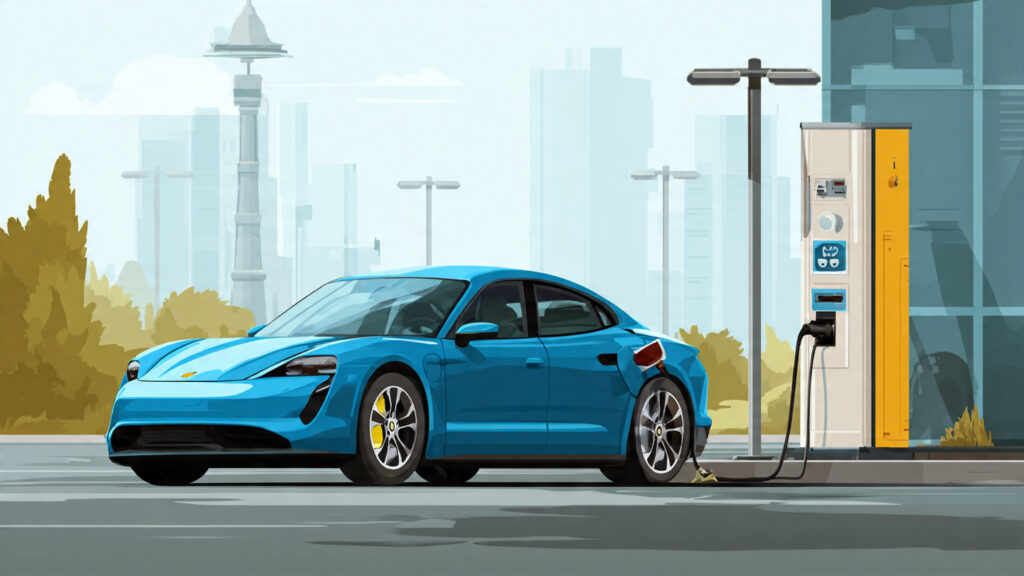
Electric car advantages:
- Silent operation (no engine noise)
- Smooth acceleration (no gear shifts)
- Lower center of gravity (battery placement improves handling)
- Regenerative braking (car slows down when you release accelerator)
- Minimal vibration
Sanjay test-drove a Mahindra XUV400 EV. He owns a petrol XUV300. After the test drive, he said “It feels like I’ve been driving an older version of the same car all this time.”
That’s the reaction I hear repeatedly. People try EVs expecting something different. They discover something better.
Maintenance Is Dramatically Simpler
Electric motors have about 20 moving parts. Petrol engines? Over 2,000.
Fewer moving parts mean:
- Less that can break
- Lower maintenance costs
- Longer intervals between services
- No oil changes
- No timing belt replacements
- No spark plug changes
- No exhaust system repairs
Vikram owns a taxi service. He switched five cars to electric. His maintenance costs dropped by 70%. His drivers spend less time at service centers and more time earning money.
The only regular maintenance needs are tires, brakes (which last longer due to regenerative braking), and cabin filters. That’s it.
Resale Value Concerns Are Fading
“What about resale value?” everyone asks.
Fair question. The used EV market is still developing. But here’s what’s changing:
Battery warranties now cover 8-10 years. This reduces buyer anxiety about the most expensive component. As more EVs enter the market, used EV buyers will increase proportionally.
Plus, consider this: if petrol car sales are banned by 2035, and petrol stations start closing down, what happens to petrol car resale values then?
The transition period creates uncertainty. But once we’re past it, EVs will have better resale value because they’re the only option.
Meera bought a used Tata Tigor EV from 2021. Saved ₹3 lakhs compared to new. Battery health was 92%. She’s perfectly happy with it. The used EV market exists and is growing.
The Grid Can Handle It
“Won’t all these EVs crash the electrical grid?” skeptics worry.
Short answer: No.
Most EV charging happens overnight during off-peak hours when electricity demand is lowest. Power plants run anyway. EVs simply utilize that unused capacity.
Smart charging technology will eventually allow EVs to charge when renewable energy is abundant and pause when it isn’t. Some systems even let EVs feed power back to the grid during peak demand.
BESCOM in Bangalore has studied this. They confirmed the grid can handle significant EV adoption with minimal upgrades, especially with off-peak charging.
As one grid engineer told me: “We’re more worried about summer AC demand than EV charging.”
Job Creation in New Sectors
Yes, traditional automotive jobs will decline. But new jobs are emerging:
- Battery manufacturing
- Charging station installation and maintenance
- EV software development
- Renewable energy integration
- Recycling and battery refurbishment
Tata’s gigafactory in Gujarat will employ thousands. Every charging network needs technicians. Battery recycling is a growing industry.
Transition creates displacement, but it also creates opportunity. India has a chance to become a global leader in EV manufacturing if we act quickly.
Rohit retrained from being a diesel engine mechanic to an EV technician. Took six months. His salary increased by 40% because EV skills are in demand.
Common Questions People Ask
Are electric cars actually better for the environment if electricity comes from coal? Yes, even with coal-based electricity, EVs produce fewer lifetime emissions than petrol cars. Plus, the grid gets cleaner every year as renewable energy expands.
What happens when the battery dies? Batteries degrade slowly over 8-15 years. They don’t suddenly die. When they reach end of life, they’re recycled or repurposed for stationary energy storage.
Can I drive an EV in the rain? Absolutely. EVs are completely sealed and waterproof. Many can drive through deeper water than petrol cars because there’s no air intake.
How long do batteries last? Modern EV batteries last 10-15 years or more. Many retain 80%+ capacity after 2 lakh kilometers. Warranties typically cover 8 years or 1.6 lakh kilometers.
What if I can’t charge at home? This is challenging but improving. Look for apartments with charging facilities, use workplace charging, or rely on public fast chargers for now. Infrastructure is expanding rapidly.
The Transition Is Accelerating
Five years ago, buying an electric car meant limited options, range anxiety, and infrastructure worries.
Today, there are 20+ models available in India. Ranges exceed 350 km. Charging networks are spreading. Prices are dropping.
Five years from now, buying a petrol car will seem outdated. Like buying a flip phone in the smartphone era.
Signs the tipping point is near:
- Major manufacturers abandoning new petrol engine development
- Charging stations appearing at most malls and highways
- EV prices approaching petrol car prices
- Range anxiety becoming less common
- Used EV market developing normally
Anita works at a car magazine. She tells me manufacturer briefings have shifted entirely to electric models. The innovation, the investment, the excitement—it’s all in the EV segment now.
Petrol car development is in maintenance mode. Electric is where the future is being built.
What This Means For You
If you’re buying a car in 2025, should it be electric?
Maybe. Depends on your situation.
Buy electric if:
- You have home charging capability
- Daily driving is under 200 km
- You want lower running costs
- You value smooth, quiet driving
- You’re keeping the car for 5+ years
Wait a bit if:
- You can’t charge at home and public infrastructure is weak in your area
- You regularly drive 400+ km in a day
- You need to buy used (market still developing)
- You’re in a very remote area with no charging options
But even if you wait, understand: you’re waiting for logistics, not because petrol is better. You’re waiting for the infrastructure to catch up to where the technology already is.
The Inevitable Conclusion
The future isn’t electric because of ideology or environmental virtue signaling.
The future is electric because it makes economic sense. Because technology keeps improving. Because governments are mandating it. Because oil dependency is a liability. Because driving electric is objectively better once you try it.
This isn’t about saving the planet (though that’s nice). This is about saving money, gaining convenience, and adapting to what’s clearly coming.
Rajesh, my neighbor who switched last month? He calculated his break-even point at three years. After that, every kilometer is pure savings. Over ten years of ownership, he’ll save enough to buy another car.
That’s not futuristic thinking. That’s basic math.
The transportation future is electric not because it should be. But because it will be. The question isn’t if, it’s when.
And for a growing number of people, “when” is right now.